


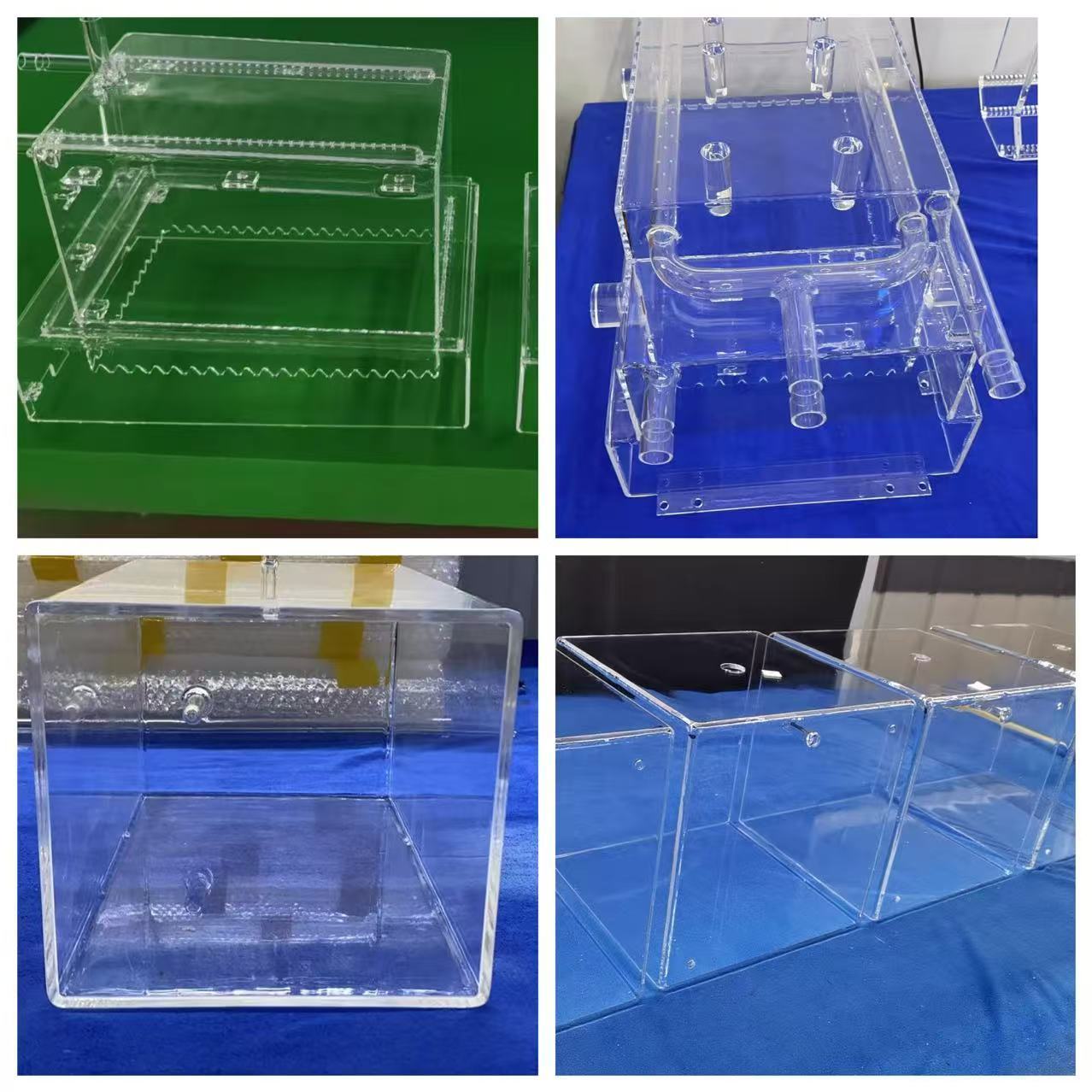
Tùy chỉnh JGS2 Quartz Square Tank-Amy
Được xuất bản vào ngày: June 24, 2026
1. Tổng quan khách hàng
Khách hàng là một phòng thí nghiệm nghiên cứu và phát triển quang điện và quang điện, thực hiện thử nghiệm phơi silicon và thử nghiệm khắc hóa học.
2. Điểm đau của xe tăng ban đầu
- Acrylic dễ bị ăn mòn bởi các hóa chất và giải phóng tạp chất; kính thông thường xả các ion kim loại để gây ô nhiễm các mẫu.
- Tính ổn định nhiệt kém: nhựa mềm ở nhiệt độ cao, kính thường bị nứt trong chu kỳ lỏng nóng lạnh.
- Các bể tiêu chuẩn không có bracket và khe cắm wafer tích hợp, dẫn đến việc làm sạch không đồng đều và kết quả thử nghiệm không ổn định.
- Tính minh bạch thấp ngăn chặn quan sát phản ứng mẫu trong thời gian thực.
3. JGS2 Quartz Tank Solution
- Vật liệu: JGS2 silica tan lửa, khả năng truyền ánh sáng cao, chống axit tốt và hiệu quả chi phí cho sử dụng trong phòng thí nghiệm.
- Cấu trúc: Được hàn hoàn toàn với sơn nóng giảm căng thẳng, được trang bị các khối hỗ trợ bên trong, khe cắm wafer, bộ chống dòng chảy, các ống treo và lỗ lỏng như trong hình ảnh.
- Bề mặt: Làm bóng gương trong suốt bên trong và bên ngoài, không làm bóng bằng ngọn lửa để dễ dàng làm sạch dư lượng.
4. Hiệu ứng ứng dụng
- Không có sự lắng đọng tạp chất sau khi ngâm hóa chất lâu dài; biến động dữ liệu thử giảm đáng kể.
- 6 lần tuổi thọ lâu hơn các thùng acrylic, không bị nứt khi thay đổi nhiệt độ nhiều lần.
- Cơ thể hoàn toàn trong suốt cho phép quan sát trực tiếp các phản ứng mà không cần mở bể.
- Hiệu quả hơn chi phí FS03 silica nóng chảy cho các thí nghiệm phòng thí nghiệm quy mô nhỏ.
5Kết luận
Các thùng thạch anh JGS2 tùy chỉnh cân bằng hiệu suất và chi phí, giải quyết hoàn hảo các vấn đề ô nhiễm, tổn thương nhiệt và không phù hợp cấu trúc của các thùng chứa truyền thống.Nó là một sự lựa chọn lý tưởng cho các quá trình ướt trong phòng thí nghiệm quang điện và quang điện tử.

